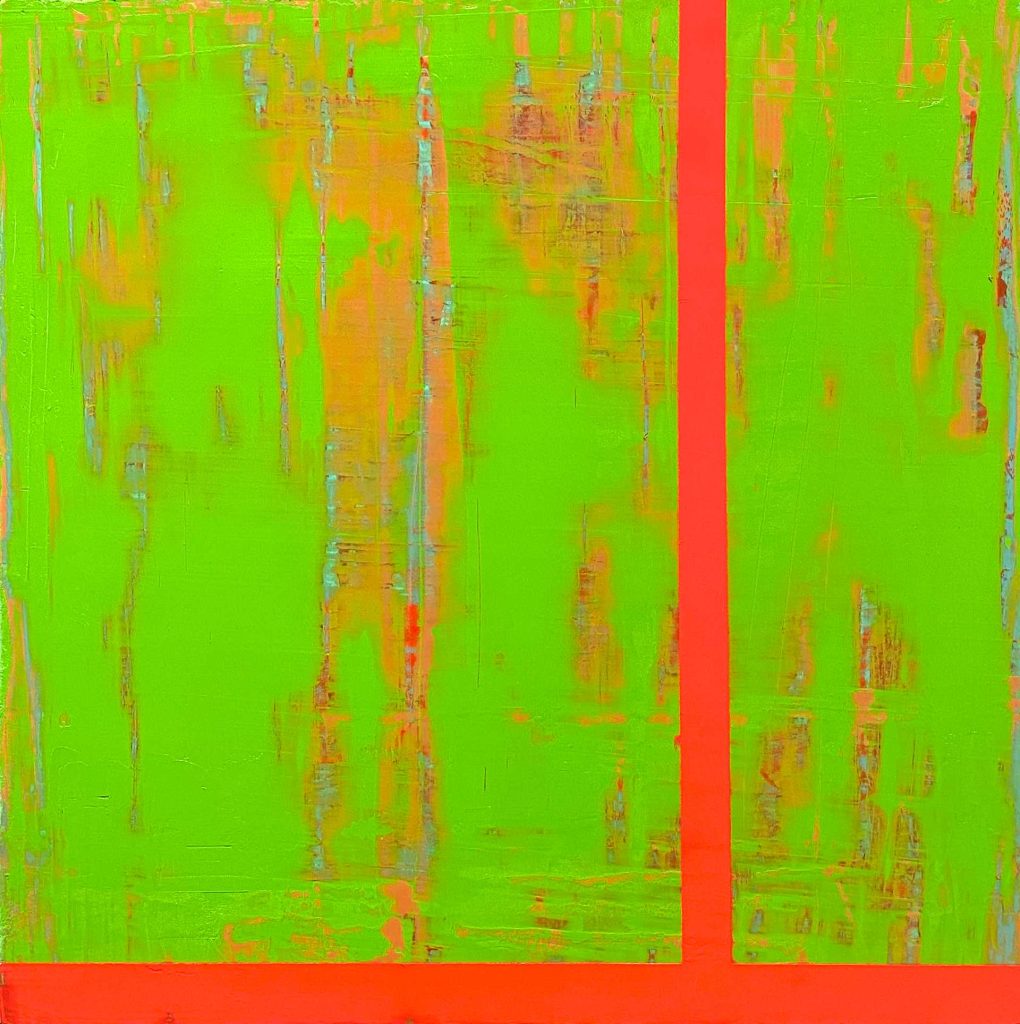
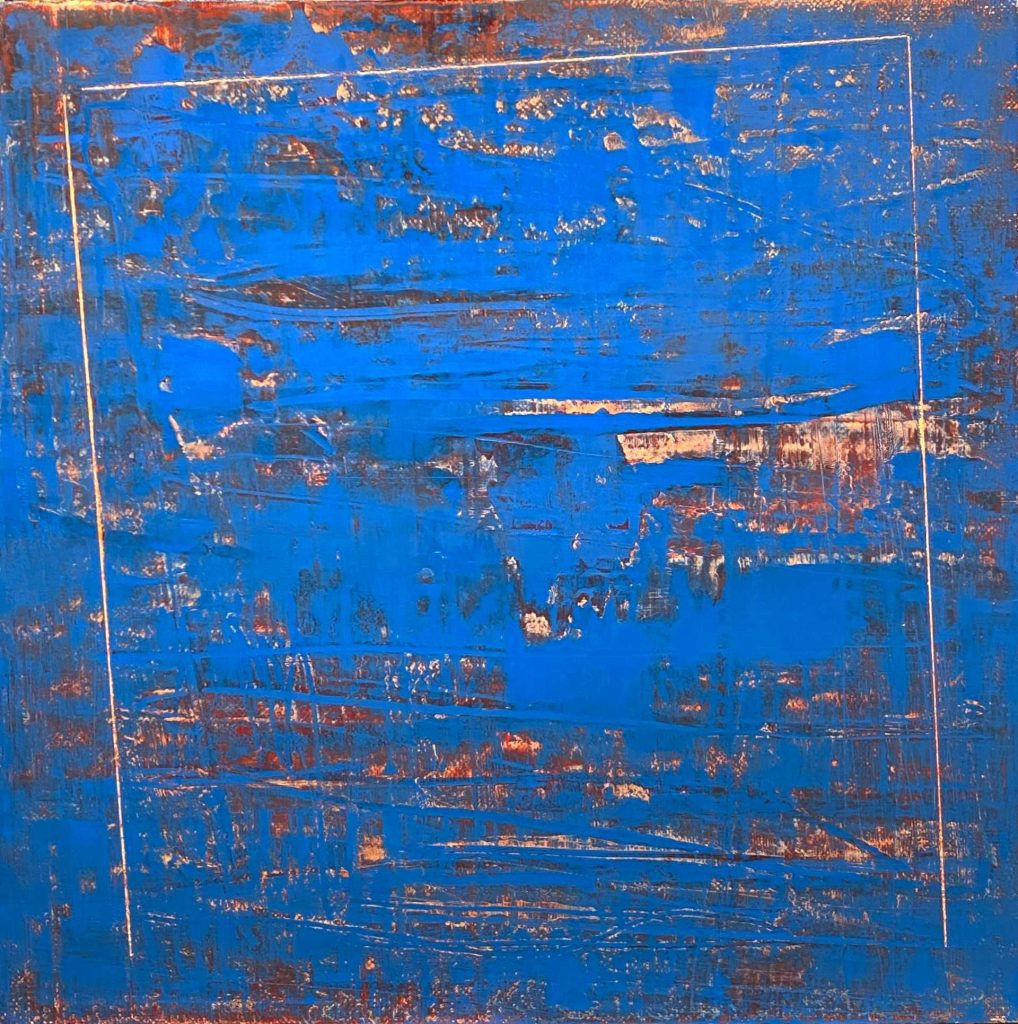
Throughout this series, I have been exploring “the struggle between accidents and inevitability.” Yet recently, my interest has expanded beyond this pair toward the very fact that “different elements stand beside one another and become entangled.” Depending on how color relates to color, stroke to stroke, or one thing to another, the whole gives rise to various meanings. In haiku, with its limited number of words, this has been regarded as an especially important issue and has been discussed through terms such as combination, juxtaposition, montage, or the collision of two things. It may also be compared to the way notes and rests intertwine to form music. I want to develop this musical aspect separately in another series called “Rhythm and Deleuze.”
For the time being, while still working with the square, I examine the theme of “figure and ground.” In the Baconian Squares from #10 onward, by arranging and juxtaposing “figure = accidents vs. ground = inevitability,” I attempted to create something that might become a metaphor for this world, where life and death stand side by side and resonate with each other. With #21 and #40, however, we see surfaces in which this oppositional structure had been disturbed, and in which “what is figure and what is ground” was no longer clear. I feel these works acquire another level of reality, moving beyond the earlier squares, in which I had established leading and supporting roles and organized the painting fictionally. In other words, behind these versions of My Squares lies the possibility of realizing a painting closer to how the world exists: “The distinction between the principal and the subordinate cannot be determined univocally; it changes according to one’s point of view.”